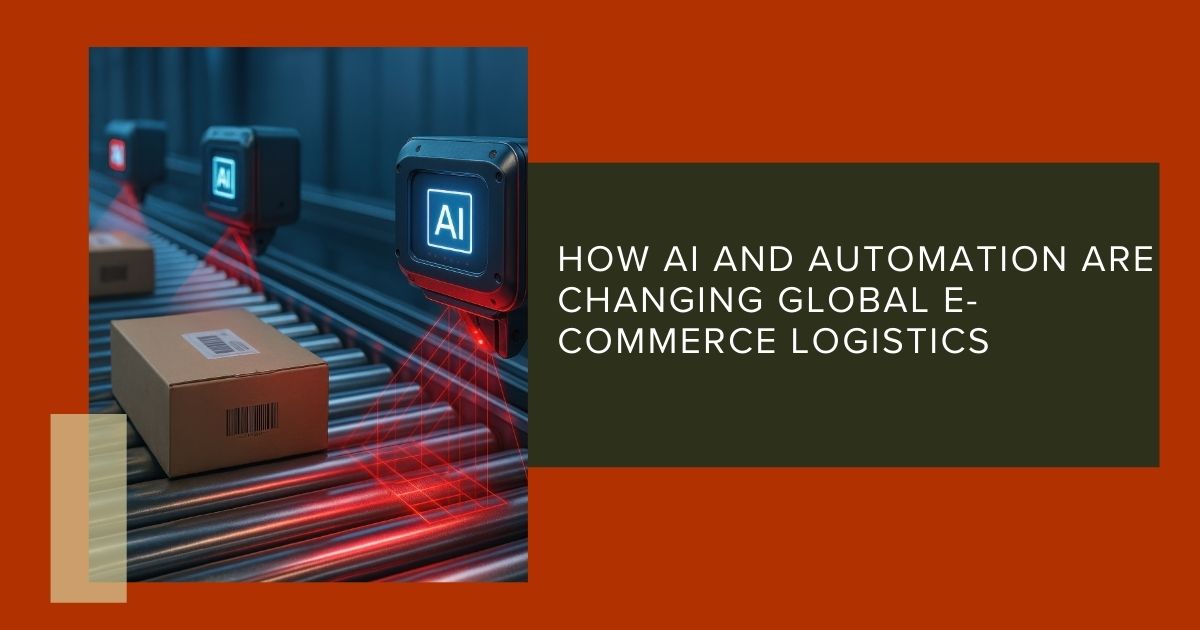
E-commerce is growing faster than ever around the world, with the silent powerhouses of AI and automation at the backbone of this rapid growth. Online shopping drives businesses to deliver faster, cheaper, and more reliably, while logistics companies are turning to intelligent systems in order to maintain a competitive edge.
Today, AI is not just a buzzword; it’s reshaping the entire supply-chain ecosystem, from warehousing to final delivery.
- Smart Warehousing: Where Automation Begins
Warehouses are no longer manual, chaotic spaces. AI-powered systems now handle:
- Automated robotics picking and packing for higher accuracy.
- Real-time tracking reduces instances of stockouts.
- Predictive restocking algorithms to maintain optimal stock levels
- Automated quality checks to minimize human error.
These advancements make fulfillments speedier and more cost-effective, which is a must for e-commerce businesses competing on speed.
- AI-Driven Forecasting for Smarter Decision-Making
E-commerce demand is unpredictable. AI prepares companies for this by:
- Analyzing the buying patterns across countries
- Predict seasonal spikes
- shipping volume forecasting
- Import/Export Planning Optimization
This helps businesses avoid overstocking, delays, or disruption in supply chains.
- Borderless Delivery Powered by Automation
Cross-border shipping comes with several complicated steps of compliance: customs documents, duties, regulations, risk assessments.
Automation does this better:
- Automated customs documents
- Duty and tax calculators
- Automated HS code classification
- Instant worldwide shipment tracking
This eliminates time-consuming manual tasks, thus speeding up global deliveries.
- Faster Last-Mile Delivery via AI
The last mile tends to be the most expensive. AI improves this via:
- Route optimization: shortest, fastest, least traffic
- Dynamic delivery windows that customers can track
- Smart Fleet Management for Fuel Cost Reduction
- Automate the delivery allocation to the nearest driver/van.
The result? Faster deliveries, lower costs, and happier customers.
- Improved Customer Experience with AI Chatbots & Notifications
Customers now expect real-time updates and instantaneous support. AI helps brands deliver that through:
- 24/7 intelligent chat support
- Pro-Active Shipment Alerts
- Delivery change options
- Personalised communication based on order behavior
This increases trust and encourages repeat purchases.
- Intelligent Risk Management for Global Trade
AI tools detect anomalies in documents, routes, and shipments.
This helps logistics companies to:
- Avoid customs delays
- Identify compliance risks early
- Prevent fraud or tampering with shipment
- Enhance overall shipment security
Global logistics becomes quicker and safer.
- Robotics & Automation in Transportation
Self-driving forklifts, automated container handling, and robotic loaders quicken the pace of operations at ports and warehouses. Certain logistics hubs make use of:
- Autonomous guided vehicles (AGVs)
- Automated container cranes
- Robotic arms for heavy lifting
This reduces human workload and eliminates bottlenecks.
- Sustainability Through Smarter Logistics
AI also assists businesses in reducing carbon footprint by:
- Optimizing container space
- Planning efficient air/sea routes
- Reducing unnecessary trips
- Using EVs for last-mile delivery
Sustainable logistics means lesser cost and eco-friendly operations.
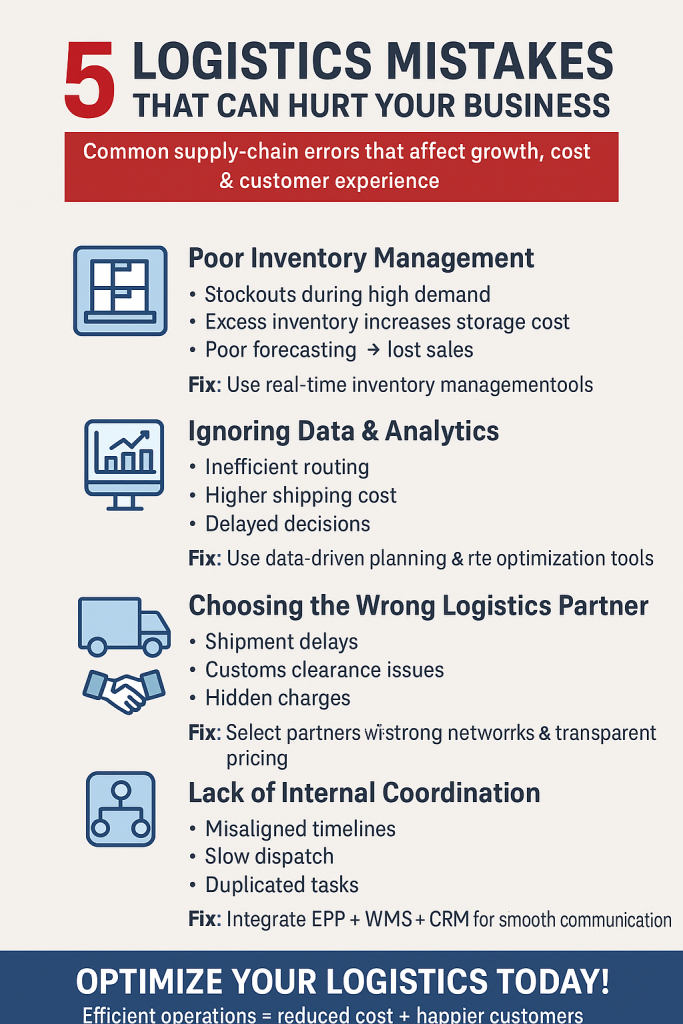
Conclusion: The future of global e-commerce logistics is intelligent.
AI and automation have moved from nice-to-have to must-have.
Be it predictive analytics or robotic automation, these technologies empower logistics companies by:
- Faster
- Cheaper
- More reliably
- Globally, without barriers
As e-commerce continues to grow, the businesses that will lead in the global marketplace are those that adopt AI-powered logistics.