Trade around the world is changing quicker than ever. Geopolitical changes, infrastructure investments, digital trade platforms, and shifting consumer demand are all affecting the way goods are exported. This change is a great chance for exporters since it opens up new markets and trade routes that can help them grow, diversify, and get ahead of the competition.
It’s now important to know where these opportunities are and how to get to them quickly.
What Are New Markets in Global Trade?
Emerging markets are places where the economy is growing quickly, industries are growing, and more people are getting involved in international trade. These marketplaces generally have:
- More and more people want things
- Growing basis for manufacturing
- Costs of labor and production that are competitive
- Trade incentives backed by the government
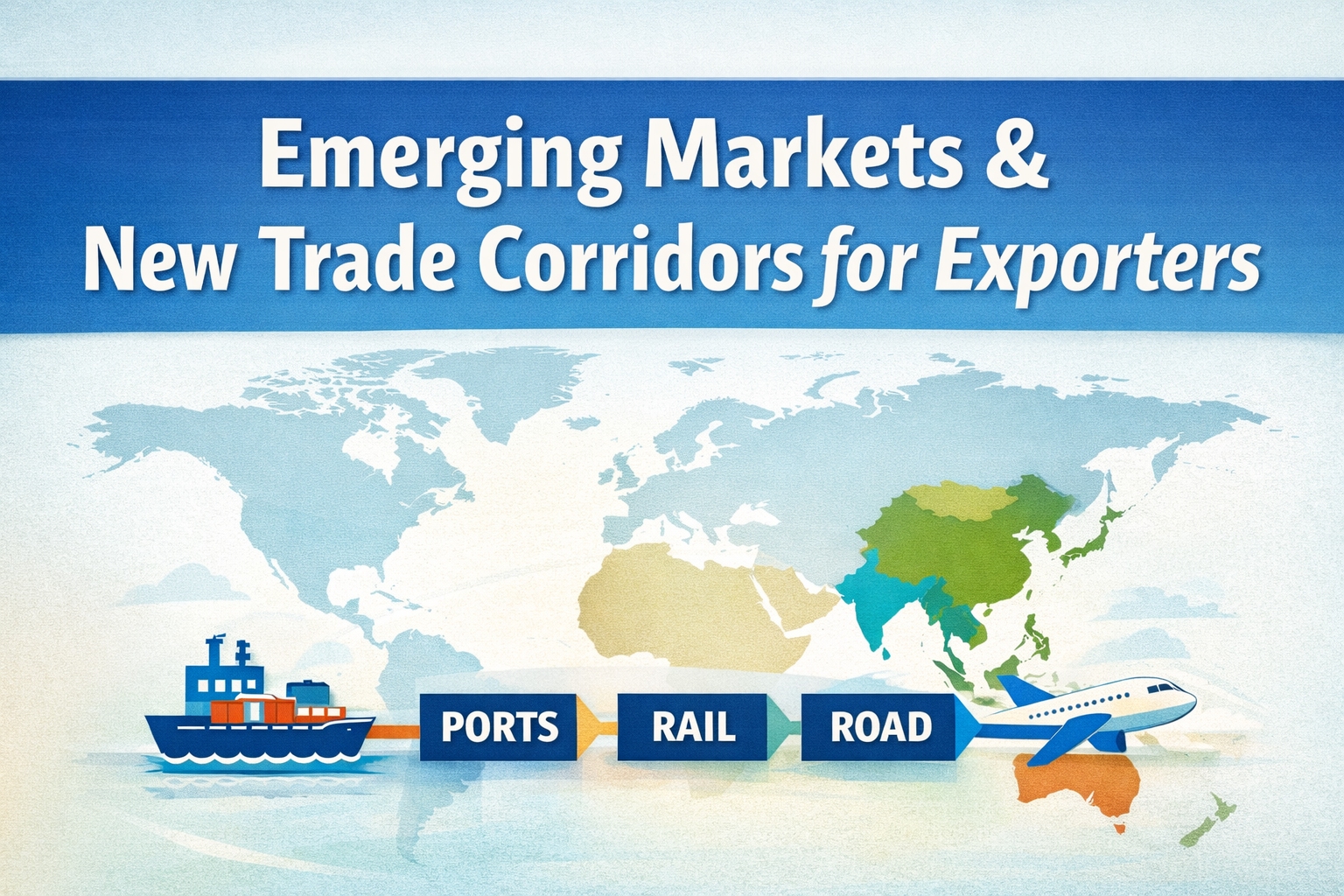
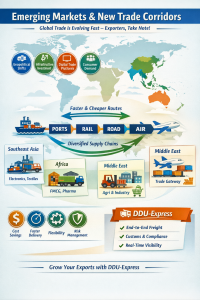
Southeast Asia, Africa, Latin America, the Middle East, and Central Asia are becoming important actors in the world’s exports and imports.
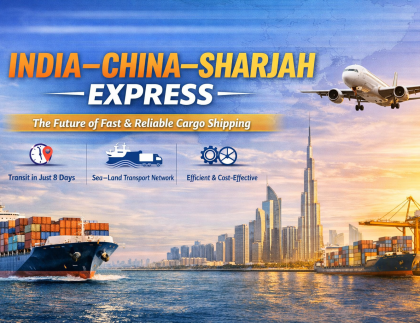
The Growth of New Trade Routes
Shipping routes, ports, rail lines, and air cargo networks are all examples of trade corridors that connect exporters to markets throughout the world. New passageways are being created because of:
- Investing in infrastructure including ports, railroads, and free zones
- Trade deals and partnerships between regions
- Diversifying away from busy or dangerous routes
- Combining technology with logistics
These corridors make it faster and cheaper to move goods and make the supply chain more resilient.
Key Emerging Markets Exporters Should Watch
1. Southeast Asia (ASEAN Region)
Southeast Asia (ASEAN Region) is a key emerging market exporter to watch. Vietnam, Indonesia, Thailand, and the Philippines are all places where things are made and used.
- There is a lot of demand for electronics, machinery, textiles, and other commodities
- Infrastructure for ports and logistics is getting better
- A strategic site that connects trade in the Asia-Pacific region
2. Africa
Africa is one of the places where trade is increasing the fastest.
- Growing middle class and industrial areas
- There is a lot of demand for building materials, fast-moving consumer goods, drugs, and machines
- New ports and inland logistics routes make it easier to get around
3. The Middle East as a Trade Route
The Middle East is no longer merely a place to go; it’s a commercial bridge between countries.
- Free zones and places to re-export
- Good connections by air and sea
- Strategic access to Africa, Europe, and Asia
4. South America
Brazil, Mexico, Chile, and Colombia are some of the countries that offer:
- High demand from agriculture and industry
- More commerce with Asia and the Middle East
- Imports fueled by e-commerce are growing
How New Trade Corridors Help Exporters
Exporters who use new corridors get:
- Less reliance on old, busy routes
- Lower costs for shipping and transportation
- Getting to the market faster
- More flexibility in the supply chain
- Better risk management during geopolitical crises
Exporters can also keep things going during port congestion, trade restrictions, or regional instability by using a variety of channels.
Problems with Logistics on New Trade Routes
There are many chances for exporters, but they also have to deal with problems like:
- Different rules and following customs rules
- There are gaps in infrastructure in some areas
- Complicated documentation
- Problems with last-mile delivery
This is where logistics partners with a lot of experience are quite important.
How DDU-Express Helps Exporters in New Trade Routes
DDU-Express helps exporters grow into new markets with confidence by offering:
- Complete international freight solutions
- Help with customs clearance and following trade rules
- Different ways to go around (by air, sea, or road)
- Finding the best route for speed and cost
- Visibility of shipments in real time
DDU-Express makes sure that exporters may smoothly and sustainably access new markets by having a strong understanding of changing trade routes.
Getting Your Export Plan Ready for the Future
Exporters should do the following to stay competitive:
- Keep an eye on new markets and changes in policy
- Change up your shipping routes
- Work with logistics companies that know how to use new corridors
- Put money on logistics systems that are focused on visibility and compliance
Conclusion
New trade routes and emerging markets are changing the way that global exports will look in the future. Companies that adapt early get to expand faster, take less risk, and stay strong for a long time. Exporters can open up new markets around the world if they have the correct logistics plan and a reliable partner like DDU-Express.