Introduction
Shipping, customs clearance, insurance, and delivery are just a few of the expenditures that come with global trade when items are sent across borders. When buyers and sellers don’t understand each other, things can take longer, cost more, and be harder to reach where they need to go. This is when Incoterms, or International Commercial Terms, come in handy. Incoterms are rules that everyone knows about that spell out what buyers and sellers must do when they move goods between countries. They decide who pays for shipping, who handles transportation, who handles customs clearance, and where the risk goes. Companies may rapidly learn about Incoterms and keep things running smoothly with a dependable logistics partner like DDU Express. This includes shipping by air freight, sea freight, or land transport, warehousing products, getting through customs, and dealing with eCommerce logistics.What do the letters in Incoterms mean?
Incoterms are a set of standard business terminology that the International Chamber of Commerce (ICC) produces. They say:- Who is in charge of shipping and getting things to people
- How the buyer and seller split the costs
- Point of risk transfer during shipping
- Duties at customs
Why Incoterms Are Important for Shipping Around the World
You should learn about Incoterms because they have a direct impact on:1️⃣ Keeping costs down
Using the improper Incoterms could make shipping, taxes, or handling costs go up.2️⃣ Managing risk
They think that shipping transfers the risk from the seller to the buyer.3️⃣ How efficiently customs operates
Clearly specified duties assist make sure that customs clearance goes smoothly and on time.4️⃣ Clear Supply Chain
Everyone, from suppliers to logistics businesses to customers, knows what they need to do.Common Incoterms
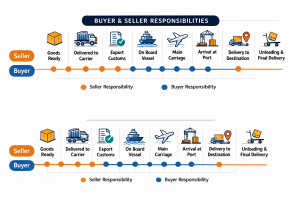
EXW (Ex Works)
The vendor has the items at their store. The buyer is responsible for all shipping, exporting, and importing. 👉 Best for purchasers who know what they’re doing and have good logistics support.FOB (Free On Board)
The seller is in charge of getting the goods through customs and onto the ship. The buyer is in charge once the goods are on board.CIF (Cost, Insurance, and Freight)
The seller pays for shipping and insurance. The risk changes once the goods are on the ship. 👉 Good for people who want to buy products but are ready to incur the risk of shipping.DAP (Delivered at Place)
The seller delivers the goods to the location where they are needed. The buyer has to pay the taxes and fees on goods that come into the country. 👉 Good for those from different countries who have to deal with customs in their own country.DDP (Delivered Duty Paid)
The vendor takes care of everything, including shipping, customs, tariffs, and delivery. 👉 Best for shipping without any problems; typically used in eCommerce logistics.How Incoterms Change the Way Different Types of Logistics Work
✈️ Air Shipping
- It costs more, but the delivery is faster.
- Incoterms make it obvious who has to pay for air travel and airport handling.
- Good for things that need to get there quickly or are very valuable.
🚢 Sea Freight
- It is cheap for big shipments.
- FOB and CIF are two common terms.
- At different times throughout the port, responsibility varies.
🚚 Land Transport
- Links ports, warehouses, and final destinations
- Important for the last part of delivery
🛃 Customs Clearance
- Decides who is responsible for the paperwork for items coming in and going out
- Delays and following the regulations are both affected
🏬 Warehousing & Storage
- Needed to maintain track of stock and fill orders
- Incoterms tell you who is in charge of storage
🛒 eCommerce Logistics
- DDP is a popular choice for retailers all around the world
- Makes it easier for customers from a lot of different nations to work with you
🏗️ Project Cargo
- Planning and taking care of project cargo is very important
- Incoterms tell you who is responsible for shipments that are risky
How DDU Express Can Help Your Business with Incoterms
It might be hard to remember Incoterms, especially when there are a lot of services involved. DDU Express makes things easy by giving you:- Logistical solutions that do everything
- Get professional help picking the proper Incoterm
- Everything you need for air freight, sea freight, land transport, customs, and warehousing in one place
- A safe way to send stuff over the world
- Solutions made just for eCommerce logistics and project cargo