Introduction
Moving project cargo across international borders involves complex transportation processes, specialized handling, and significant coordination. When cargo consists of heavy machinery, industrial equipment, infrastructure components, or other high-value assets, even a small incident can result in substantial financial losses.
This is why project cargo insurance is an important consideration when planning complex international shipments.
Unlike standard freight, project cargo often has unique characteristics that can increase transportation risks. The cargo may be oversized, difficult to handle, expensive to replace, or critical to a larger construction or industrial project.
Having the right insurance strategy can help businesses manage potential financial exposure if unexpected events occur during transportation.
In this guide, we explore the role of project cargo insurance, what risks businesses should consider, and why insurance planning should be integrated into the overall project cargo logistics process.
What Is Project Cargo Insurance?
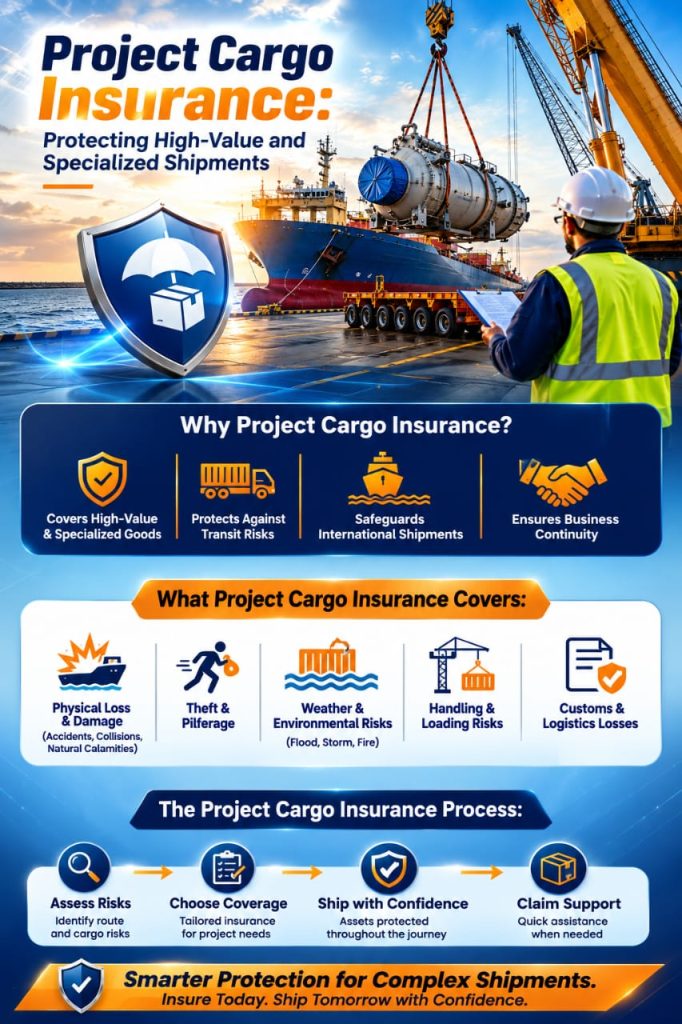
Project cargo insurance is insurance coverage designed to protect specialized, high-value, heavy, oversized, or complex cargo during transportation and related logistics activities.
Depending on the policy, coverage may apply to cargo while it is:
- Being transported by road
- Moving by rail
- Being shipped by sea
- Transported by air
- Loaded or unloaded
- Stored temporarily
- Transferred between transport modes
The exact coverage depends on the insurance policy, terms, conditions, exclusions, and applicable laws.
For businesses managing complex project cargo transportation, understanding these details before shipment is essential.
Why Is Insurance Important for Project Cargo?
Project cargo can represent a significant financial investment.
A shipment may include:
- Industrial machinery
- Power generation equipment
- Construction equipment
- Heavy engineering components
- Renewable energy equipment
- Oil and gas equipment
- Infrastructure components
If the cargo is damaged, lost, or delayed due to an insured event, the financial consequences can extend beyond the cargo itself.
Potential impacts may include:
- Replacement costs
- Repair expenses
- Project delays
- Additional transportation costs
- Storage expenses
- Equipment rental costs
Insurance can help businesses manage certain financial risks associated with cargo transportation, subject to the specific policy terms.
Understanding the Risks Involved
Before arranging project cargo insurance, businesses should understand the risks associated with the shipment.
Potential risks may include:
- Accidental damage
- Cargo loss
- Theft
- Fire
- Water damage
- Handling incidents
- Transportation accidents
- Natural events
- Loading and unloading damage
The actual risks depend on the type of cargo, transportation method, route, destination, and handling requirements.
A proper risk assessment can help businesses determine what type of insurance protection may be appropriate.
1. Cargo Value Assessment
The first step in insurance planning is determining the value of the cargo.
Businesses should consider:
- Purchase value
- Replacement value
- Repair costs
- Transportation costs
- Additional expenses
For high-value project cargo, the insured value should be carefully reviewed.
Using incorrect or incomplete valuation information can create complications if a claim is made.
Businesses should therefore maintain accurate documentation related to the cargo’s value.
2. Understanding the Scope of Coverage
Not every insurance policy provides the same level of protection.
Businesses should understand:
- What risks are covered
- What risks are excluded
- When coverage begins
- When coverage ends
- Whether loading is covered
- Whether unloading is covered
- Whether temporary storage is covered
- Whether multimodal transportation is included
These details are particularly important for project cargo logistics, where cargo may pass through multiple transportation stages.
3. Multimodal Transportation Risks
A complex shipment may move through several modes of transport.
For example:
Factory → Truck → Port → Ocean Vessel → Destination Port → Heavy-Haul Truck → Project Site
Each stage may involve different risks.
Cargo may be:
- Loaded
- Unloaded
- Transferred
- Stored
- Repositioned
Insurance planning should therefore consider the entire logistics journey.
Businesses should confirm whether their policy provides appropriate coverage throughout the complete transportation process.
4. Loading and Unloading Risks
Heavy and oversized cargo often requires specialized lifting equipment.
Potential risks can arise during:
- Factory loading
- Port handling
- Vessel loading
- Vessel discharge
- Truck loading
- Project-site unloading
For example, a lifting incident could cause damage to expensive machinery.
Businesses should understand whether these operations are included within the insurance coverage.
This is an important consideration when planning project cargo transportation.
5. Temporary Storage
Project cargo may sometimes require temporary storage during transportation.
This can happen because of:
- Port schedules
- Customs clearance
- Transportation delays
- Site readiness
- Project schedule changes
The cargo may remain in a warehouse, terminal, or storage yard before continuing its journey.
Businesses should confirm whether the insurance policy provides coverage during temporary storage and under what conditions.
6. Route and Transportation Risks
The route selected for a shipment can influence the risk profile.
A shipment may pass through:
- Busy urban areas
- Remote locations
- Mountain routes
- Ports
- Construction zones
- High-traffic corridors
For oversized and heavy cargo, route-specific risks may require additional consideration.
A project cargo route survey can help identify potential transportation challenges, while insurance planning can help businesses understand the financial risks associated with the journey.
7. Weather-Related Risks
Weather can affect complex cargo movements.
Potential challenges may include:
- Storms
- Heavy rain
- Flooding
- Strong winds
- Extreme temperatures
Depending on the policy, certain weather-related events may be covered while others may be excluded.
Businesses should review the policy conditions carefully and understand how weather-related risks are treated.
8. Theft and Security Risks
High-value project cargo can sometimes attract security risks during transportation or temporary storage.
Businesses may need to consider:
- Secure storage facilities
- Transportation security
- Cargo tracking
- Route planning
- Access controls
Insurance may provide protection against certain theft-related losses, subject to policy terms and conditions.
Combining insurance with strong security measures can help businesses manage overall transportation risk.
9. Delay-Related Financial Exposure
Cargo damage or loss is not always the only concern.
A delay involving critical project equipment can potentially affect the wider project schedule.
For example, if a key piece of machinery is damaged during transportation, the project may experience:
- Installation delays
- Construction delays
- Additional labor costs
- Equipment rental expenses
- Schedule changes
Businesses should understand that standard cargo insurance may not automatically cover every type of financial loss resulting from project delays.
Specific coverage may be required depending on the situation and policy.
10. High-Value and Specialized Equipment
Some project cargo is extremely expensive or difficult to replace.
Examples may include:
- Power generation equipment
- Large industrial machinery
- Specialized engineering components
- Heavy construction equipment
- Energy infrastructure components
The higher the value and complexity of the cargo, the more important it becomes to carefully review the insurance arrangements.
Businesses should work with qualified insurance professionals to understand appropriate coverage for their specific shipment.
11. Documentation and Proof of Value
Accurate documentation can be important when arranging insurance and handling potential claims.
Relevant records may include:
- Commercial invoices
- Packing lists
- Purchase documents
- Cargo specifications
- Photographs
- Inspection reports
- Serial numbers
- Transportation documents
Maintaining clear records can help establish the condition and value of the cargo.
For complex project cargo logistics operations, good documentation is an important part of overall risk management.
12. Cargo Condition Before Transportation
Before a shipment begins, businesses may want to document the condition of the cargo.
This can include:
- Photographs
- Inspection reports
- Packaging condition
- Visible damage
- Equipment identification
These records can help establish the cargo’s condition before transportation begins.
This can be particularly useful when moving expensive or sensitive equipment through multiple transportation stages.
13. Understanding Insurance Exclusions
One of the most important parts of reviewing project cargo insurance is understanding what is not covered.
Potential exclusions may relate to:
- Improper packaging
- Existing damage
- Certain natural events
- Delays
- Inherent defects
- Regulatory issues
- Unapproved transportation arrangements
The exact exclusions depend on the insurance policy.
Businesses should carefully review the policy wording rather than assuming that every possible transportation risk is covered.
14. Working With Insurance Professionals
Project cargo insurance can be complex.
The appropriate coverage may depend on:
- Cargo type
- Cargo value
- Transportation method
- Route
- Destination
- Storage requirements
- Handling requirements
Working with an experienced insurance broker or specialist can help businesses better understand their options.
Logistics providers may also help coordinate information required for insurance planning, but insurance coverage decisions should be reviewed with qualified insurance professionals.
15. Integrating Insurance Into Project Cargo Planning
Insurance should be considered early in the logistics planning process.
Businesses should review insurance requirements before:
- Booking transportation
- Selecting routes
- Arranging storage
- Planning lifting operations
- Starting international shipping
This ensures that potential risks are considered from the beginning.
Integrating insurance into the wider project cargo planning process can help businesses create a more comprehensive risk management strategy.
Project Cargo Insurance Checklist
Before shipping high-value or specialized cargo, businesses may consider reviewing:
✔ Cargo value
✔ Transportation methods
✔ Route and destination
✔ Loading and unloading operations
✔ Temporary storage requirements
✔ Multimodal transportation stages
✔ Policy coverage period
✔ Covered risks
✔ Policy exclusions
✔ Deductibles
✔ Documentation requirements
✔ Claims procedures
This checklist can help businesses identify areas that may require additional attention.
How DDU Express Can Support Project Cargo Logistics
Complex project cargo transportation involves more than moving cargo from one location to another.
It requires coordination between transportation providers, ports, customs teams, project managers, cargo owners, and other stakeholders.
DDU Express supports businesses with logistics solutions for complex international cargo movements, helping coordinate transportation requirements across different stages of the supply chain.
While insurance arrangements are typically handled through insurers or insurance specialists, logistics planning can help businesses identify transportation and handling considerations that may be relevant to their overall risk management strategy.
For high-value and specialized shipments, combining careful logistics planning with appropriate insurance arrangements can help businesses approach complex cargo movements with greater confidence.
Final Thoughts
Moving high-value project cargo involves financial risks that businesses should carefully consider before transportation begins.
From loading and unloading to international transportation, temporary storage, and final delivery, cargo may pass through multiple stages where unexpected incidents can occur.
Project cargo insurance can provide financial protection against certain covered risks, but businesses should carefully review the specific terms, conditions, limitations, and exclusions of their policy.
The best approach is to consider insurance as part of the overall project cargo logistics strategy—not as an afterthought.
By combining detailed transportation planning, accurate documentation, risk assessment, and appropriate insurance coverage, businesses can create a more comprehensive approach to managing complex international cargo movements.
Planning a high-value project cargo shipment?
Partner with DDU Express for coordinated project cargo logistics solutions designed to support complex international cargo movements from origin to final destination.

Weiworld is an experienced logistics and shipping professional with more than 20 years of industry experience, with extensive knowledge of international shipping, freight forwarding, cargo movement, and logistics operations.
Over the course of his career, he has developed deep practical expertise in Middle East logistics and operations, including shipping processes, international cargo transportation, customs-related procedures, and supply chain coordination.
At DDU Express, Weiworld shares practical insights and industry knowledge to help businesses better understand international shipping, freight forwarding, DDP services, cargo transportation, and logistics solutions across the Middle East and global markets.
His extensive industry experience provides valuable perspective for businesses looking to simplify international shipping and make informed decisions when moving cargo between countries.