Introduction
As online shopping continues its upward trend in 2026, organizations are seeking fulfillment solutions that can get goods to customers quickly, decrease costs and create amazing customer experiences.
Amazon FBA ( Fulfillment by Amazon ) and third party fulfillment businesses ( 3PL’s ) are the two most popular fulfillment techniques. Both systems help enterprises with their storage, packing and shipping needs, but they differ greatly in terms of flexibility, cost, brand management and scalability.
The way you fulfill your orders can affect everything from profitability to customer satisfaction to international expansion to long-term growth in your organization. Knowing the pros and cons of each allows you to make an informed decision that fits your individual goals.
What is FBA on Amazon?
Amazon FBA allows sellers to store their products in Amazon’s warehouses. Amazon does choosing, packing, shipping, customer service and returns on anything a client buys.
How Does Amazon FBA Work
The process is easy:
- Sellers ship inventory to Amazon fulfillment facilities.
- Amazon keeps the merchandise.
- Customers make their orders on Amazon.
- Amazon chooses, packs and sends the orders.
- Amazon handles the customer support and refunds.
This lets them connect into Amazon’s vast shipping network and customer base.
Advantages of Amazon FBA
Customer access best
With the benefits of Prime shipping, Amazon’s fulfillment services (FBA) can help your products get more customer attention and visibility.
Quick Shipping Ability
Vendors can meet customer expectations with fast delivery options thanks to Amazon’s logistics infrastructure.
Simplifying Operations
Amazon does a lot of the fulfillment, allowing firms to focus on sourcing and promoting products.
More marketplace exposure
FBA products can get preferential placement inside the Amazon marketplace ecosystem.
Possible Disadvantages of Amazon FBA
Storage Fees
Long-term storage of goods can be costly, especially for slow-moving products.
Limited influence Brand
Amazon has much influence over the packaging and the customer experience.
Market dependency
Corporations increasingly rely on Amazon’s regulations, fees and modifications to its platform.
Challenges of Multi-Channel
Amazon does provide multi-channel fulfillment, but that’s not necessarily the most flexible option for firms selling on many platforms.
What is Third Party Fulfillment (3PL)?
Fulfillment providers, such as 3rd party warehouses and shipping organizations, can help businesses selling through numerous sales channels with warehousing, inventory management, order processing, packaging and shipping.
Unlike Amazon FBA, third-party fulfillment companies generally service multiple marketplaces, websites and retail channels at the same time.
Third-Party Fulfillment Process:
- The fulfillment supplier has a warehouse with their inventory.
- Orders are received from a multitude of sales outlets.
- The provider picks, packs and ships the order.
- Inventory & Shipping Details Realtime
This gives companies more control and the advantage of expert logistics support.
TPF Advantages
More adaptable
Business can sell via:
- Shopify sites
- WooCommerce sites
- Marketplaces
- Social commerce sites.
- Retail channels
More Brand Management News
Companies can tailor packaging, inserts and consumer experiences.
Scalability
Third party providers could scale across several markets and sales channels.
Support for international expansion
Many providers offer cross-border logistics, customs assistance and global fulfilment.
Less Dependence on the Platform
A business may belong to many different marketplace ecosystems.
Disadvantages of Third Party Fulfillment Service
Choose a Vendor
The decision of choosing the right service requires a comprehensive assessment.
Flexible Pricing Options
Prices vary based on services, storage needs and quantity transported.
Prerequisites for Integration
Businesses may also have to incorporate fulfillment systems with a lot of sales channels.
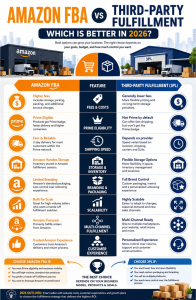
Amazon FBA vs. Third Party Fulfillment: Main Differences
Storage Charges
- Amazon FBA Peak Season Fees Potentially Higher
May be long term storage cost.
Third Party Logistics
More flexible storage
It is frequently better suited to enterprises with a broader range of inventory needs.
Flexible Delivery
Amazon FBA
Primarily optimized for Amazon sales.
Third Party Fulfillment
Support multiple sales channels and international shipping methods
Brand Management
Limited Customization for Amazon FBA
Third-party fulfillment services
Greater control over packaging and consumer experience.
Multi-Channel, Sales
Amazon FBA
The ones around Amazon are the greatest.
Third Party Fulfillment
Built for companies selling on multiple platforms.
International Expansion Amazon FBA.
It is available in various regions but has its own requirements from Amazon.
Third party fulfillment
usually more customized international logistics solutions
Customer Relationship Ownership
Amazon FBA
But most client transactions are still occurring inside the Amazon ecosystem.
Third Party Fulfillment
Business has a direct interaction with customers and there are opportunities for brand involvement.
Which Fulfillment Option Is Best For Your Business?
If you think Amazon FBA could be the ideal fit for you:
- Amazon operation only
- New merchants’ ease of operation
- Brands that cater to Prime customers
- Companies focused on growing marketplaces
Third-party fulfillment might be right for you:
- Retail, multi-channel
- Scaling DTC Brands
- Multinational Company
- Companies looking for a stronger identity
- Companies looking for more operational flexibility
The emergence of hybrid fulfillment models: Why more organizations are turning hybrid
By 2026, many enterprises will be using both Amazon FBA and third-party fulfillment services.
The hybrid model allows companies to:
- Take advantage of Amazon’s marketplace
- Manage sales outlets other than Amazon.
- Diversity of logistics processes
- scale better
- Reduce reliance on a single platform
A hybrid approach allows developing e-commerce businesses to get the best of both worlds.
Things To Consider When Choosing
Here are the things that companies should consider before picking a fulfillment solution:
Distribution Channels
Where do most of your orders come from?
Growth Strategy
Global thinking? Are you planning to be cross-platform?
Stock needs
How much storage do you require?
Customer experience objectives
The significance of branded packaging and customer interaction?
Tariffs
What approach strikes the best balance between service quality and profitability?
Answers to these questions can help a corporation choose a fulfillment plan that meets its aims.
How E-commerce Fulfillment Can Be Helped By DDU Express
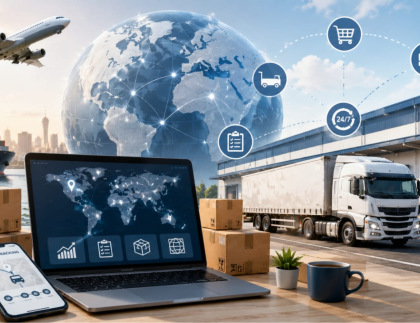
DDU Express provides comprehensive fulfillment and logistics services to support companies to grow cost-effectively in local and global markets.
Services offered are:
- Inventory and warehouse management
- Distribution centre
- Cross-Border Shipping
- Global logistics support
- Live shipment tracking
- E-commerce order fulfillment
- Flexible warehousing solutions
- Distribution & Logistics Support Jebel Ali Free Zone
DDU Express optimizes your logistics operations and increase your delivery performance, whether you are selling on online marketplaces, your own independent websites or a multi-channel approach.
Conclusions
There are pros and cons to both Amazon FBA and third-party fulfillment providers, and the best solution will depend on a business’s goals, sales channels and growth strategy. Amazon FBA has access to Amazon’s vast marketplace ecosystem. But third-party fulfillment has more freedom, brand control, and help with multi-channel sales. Growing organizations seek hybrid fulfillment solutions to strike a balance between efficiency and scalability. A fulfillment plan that is aligned with operational demands and long-term goals can help companies support sustainable growth and a better customer experience.

Weiworld is an experienced logistics and shipping professional with more than 20 years of industry experience, with extensive knowledge of international shipping, freight forwarding, cargo movement, and logistics operations.
Over the course of his career, he has developed deep practical expertise in Middle East logistics and operations, including shipping processes, international cargo transportation, customs-related procedures, and supply chain coordination.
At DDU Express, Weiworld shares practical insights and industry knowledge to help businesses better understand international shipping, freight forwarding, DDP services, cargo transportation, and logistics solutions across the Middle East and global markets.
His extensive industry experience provides valuable perspective for businesses looking to simplify international shipping and make informed decisions when moving cargo between countries.