

Introduction
Booking a regular shipment isn’t complicated, but shipping huge, heavy or highly specialised items over international boundaries is. Logistics staff have to meticulously plan every step of a piece of equipment’s trip before it leaves the manufacturer or project site. This is where project cargo pre-shipment planning is crucial. Every detail matters, whether it is knowing the dimensions and weight of cargo or evaluating routes, creating documents, coordinating means of transport and identifying dangers. For companies that deal with industrial machinery, building equipment, energy infrastructure and other specialised cargo, good project cargo planning helps to minimise unforeseen delays, save excessive expenses and ensure that the shipment arrives at its destination safely. In this article we take a look at what happens before project cargo transportation begins, and why adequate planning is one of the most critical areas of complicated logistics.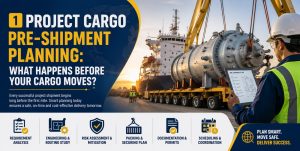
Project Cargo Pre-Shipment Planning; What Is It?
What Is Project Cargo Pre-Shipment Planning?
Project cargo pre-shipment planning is the planning and preparations of a complex cargo movement before the actual transportation. Unlike conventional freight, project cargo usually involves cargo that is:- Very heavy
- Oversized or Oddly Shaped
- Of great value
- Hard to handle
- Time sensitive
- Borne by specific equipment
Why Is Pre-Shipment Planning Important in Project Cargo?
With larger and more sophisticated cargo there are a higher number of elements to consider before transportation can start. Good preparation for project cargo allows logistics teams to spot potential difficulties before they effect the shipment. For example, a cargo might encounter problems like:- Roads that can’t support the cargo weight
- Bridges with low height clearance
- Narrow streets or sharp curves
- Infrastructure limits of ports
- Restrictions on heavy transporters
- Special Handling Requirements
- Customs or regulatory obligations
- Narrow windows of delivery
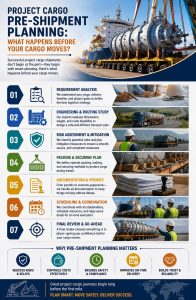
Step 1: Know Your Cargo
The first step in project cargo pre-shipment planning is to establish exactly what is to be shipped. Logistics teams generally gather thorough information about the goods, including:- Width, height and length
- Gross weight
- Center of Gravaty
- Cargo valued at
- Points de levage
- Packaging requirements
- Loading and unloading requirements
- Instructions for use
- Special transportation limitations
Step 2: Determining Origin and Destination
Logistics professionals will first decide on the goods, and then decide where the shipment will start and where it needs to go. This includes a review of:- Access to factory/warehouse
- Loading zones
- Harbour facilities
- Road conditions
- availability of the delivery site
- Lifting equipment supplied
- Storage needs
- Last points of disembarkation
Step 3: Carrying Out Route and Feasibility Studies
One of the most significant aspects of project cargo planning is to assess the physical and operational suitability of the chosen route. Depending on the type of goods, logistics teams may consider:- Width of road
- Bridge carrying capacity
- Height limits
- Turing circle
- Clearance of tunnels
- Road inclines
- Traffic
- Access to ports
- Seasonal limitations
Step 4: Choosing the Appropriate Transportation Strategy
Once the criteria of cargo and route are clear, logistics professionals may design the right transportation strategy. Depending on the shipping, this could include:- Sea freight
- Road transport
- Rail transport
- Air cargo
- Boats
- Specialised Heavy-Haul Vehicles
Step 5: Assessing Handling and Lifting Requirements
Heavy and large cargo sometimes requires specialised equipment to load, unload and position it. During the planning phase, logistics teams may determine if the shipment requires:- Cranes heavy duty
- Mobile cranes
- Hydraulic Elevation Systems
- Forklifts
- Trailers – custom
- Roll-on, Roll-off Equipment
- Other heavy lifting equipment
Step 6: Collecting the Permits and Documentation
Simple shipments usually require less documentation than complex packages. The shipment may need to have: Depending on the cargo and destination- Commercial invoices
- Packing lists
- Bills of lading
- Import & export documents
- Transport Authorisations
- Oversize load permits
- Technical details
- Instructions for cargo handling
- Insurance papers
Step 7: Develop the Project Timeline
Large scale projects have rigorous time schedules to follow. One piece of crucial equipment in delivery can possibly impact construction, installation, manufacturing or infrastructure development. Therefore, project cargo planning must include a precise calendar of essential milestones. This could include:- Date of readiness of the cargo
- Pick up at factory
- Load date
- Arrival at port
- Ship’s departure
- Estimated time of arrival
- Customs clearance
- Inland transport
- End delivery
- Lay down and offload
Step 8: Identify Potential Risks
No complex transport is entirely risk-free. Logistics specialists should be able to spot possible difficulties before they become problems via project cargo pre-shipment planning. Potential dangers may be:- Weather disturbances
- Congestion at the port
- Equipment malfunction
- Closed Roads
- Delays in customs
- Mistakes in documentation
- Surprise route barriers
- Schedule Alterations
- Cargo handling problems
Step 9: Bring everyone together to be involved
The transportation of project cargo generally involves many different stakeholders. These may consist of:- Cargo owners
- Makers
- Shipping agents
- Shipping companies
- Trucking businesses
- Port operators
- Customs authorities
- Surveyors
- Operators of cranes
- Project managers
- Final site teams
Step 10: Final review before shipment
Before loading the cargo for its trip, the logistics crew should perform a last check on the full transportation plan. This review may prove:- Cargo requirements
- Packing
- Arrangements for loading
- Routes viability
- Permits required
- Travel reservations
- Handling equipments
- Documentation
- Insurance
- Lead Time
- Contingency plans
How DDU Express Can Help Your Project Cargo Needs
Project freight logistics management needs cooperation and planning, as well as awareness of international shipping requirements. DDU Express provides logistics solutions to help move cargo through the complexities of international shipping, assisting businesses with the many stages of the trip. An experienced logistics partner can help streamline the process of transporting specialised cargo across borders, from initial planning and transportation coordination to customs support and delivery arrangements. Whether you’re moving industrial machinery, infrastructure equipment, construction supplies or other specialised shipments, you may get experienced project cargo transportation support to help you arrange your journey more efficiently.Summary
Project cargo transportation success starts long before the cargo is loaded onto a truck, vessel or aircraft. Detailed project cargo pre-shipment planning allows companies to understand their cargo needs, analyse transportation options, prepare documents, coordinate stakeholders, manage risks and set achievable schedules. Preparation for complex and high-value shipments is not only an administrative task. It’s an important component in making sure goods can flow securely and efficiently from where it starts out to where it ends up. With the correct planning and logistical help, organisations can transport complex cargo with greater confidence and control over their international supply chain. Need help with your next cargo shipment project? Work with DDU Express for reliable logistics coordination and tailor-made project cargo logistics solutions tailored to your shipment needs.
Weiworld is an experienced logistics and shipping professional with more than 20 years of industry experience, with extensive knowledge of international shipping, freight forwarding, cargo movement, and logistics operations.
Over the course of his career, he has developed deep practical expertise in Middle East logistics and operations, including shipping processes, international cargo transportation, customs-related procedures, and supply chain coordination.
At DDU Express, Weiworld shares practical insights and industry knowledge to help businesses better understand international shipping, freight forwarding, DDP services, cargo transportation, and logistics solutions across the Middle East and global markets.
His extensive industry experience provides valuable perspective for businesses looking to simplify international shipping and make informed decisions when moving cargo between countries.