
Introduction
Very rarely is one logistics provider or transportation firm the only source of a successful project cargo shipment. The transportation of large, heavy or project cargo is generally a collaborative process including manufacturers, freight forwarders, carriers, port operators, customs officials, engineers, surveyors, transport companies and project teams. Each stakeholder has a certain job to play. If one party misses a deadline, gives false information, or doesn’t convey an operational change, it can be felt across the entire shipment. This is why stakeholder cooperation is such a vital aspect of project cargo planning in a complicated logistics environment. Good coordination means that everyone knows what they are responsible for, when they need to accomplish it, what paperwork and information is required and what things depend on what. In this tutorial, we look at how firms may bring numerous stakeholders together to run a smoother project cargo logistics operation.
Who are the main stakeholders in project cargo?
Coordinating a complex shipment is easier when you know who’s involved. Depending on cargo and project, stakeholders could be:- Owners of cargo
- Manufacturers
- Suppliers
- Forwarders
- Logistics vendors
- Shipping Companies
- Commercial aircraft
- Road transport firms
- Railway operators
- Authority port
- Terminal operators
- Customs officials
- Government agencies
- Crane operators
- Engineers
- Surveyors
- Insurance Companies
- Project managers
- site teams final
Why It Is Important to Work with Stakeholders?
Communication is a key part of project cargo planning when numerous companies and teams are involved. Businesses may face: Without sufficient cooperation,- Missed transport schedules
- Errors in documentation
- Delays in loading
- Shipping congestion
- Equipment availability problems
- Customs problems
- Delays in site delivery
- Higher storage costs
- Poor communication among the team
1. Set Roles and Responsibilities
Clear responsibilities are the first stage, to coordinate the stakeholders. All parties should understand:- What their responsibilities are
- When they are finished with their assignment
- To whom they report
- What info do they need
- Who uses their work? Stakeholders
2. Create a Central Communication Framework
For complex project shipping operations there can be dozens of conversations between different parties. Information might get fragmented without a core communication system. A coordinated communication system can assist keep the stakeholders on the same page. This may include:- Routine project meetings
- Common timetables
- Email alerts
- Digital tools for project management
- Shipment tracking tools
- Status reports
- Central repository of documentation
3. Develop a Detailed Project Timeline
“A clear timeline is one of the most valuable tools in project cargo planning. The timetable should include key milestones such as:- Cargo production completed
- Cargo readiness
- Pre shipment inspection
- Pickup – Truck
- Land transport
- Arrival at port
- Loading…
- Departure of ship
- Arrive at destination.
- Customs clearances
- Inland delivery
- Arrive on site
- Release.
- Final placement
4. Determine Critical Dependencies
Complex shipment usually requires many interrelated tasks. One delay can impact several downstream procedures. for example, → Cargo Ready → Pickup → Arrive at Port → Load on Vessel → International Transit → Customs Clearance → Last Mile Delivery If the cargo is not ready on time, the pickup could be delayed. The cargo may miss its intended vessel if the pickup is delayed. If the vessel is missed the whole timetable of deliveries can be moved. Logistics teams can focus on operations that have the biggest impact on the entire project cargo transportation timeline by identifying these dependencies early on.5. Communicate with the cargo owner
The cargo owner or manufacturer is the main stakeholder in the logistics process. The logistics crew needs good information about:- Cargo volume
- Weight
- Packaging
- Date available
- Dealing with requirements
- Lifting points
- Specifications
- Delivery Specifications
6. Transportation Providers Coordination
Complex cargoes can have multiple transportation partners. One shipment may need:- Speciality trucking
- Sea freight
- Transportation by rail
- Delivered inland
- Hard Lifting
- Vehicles are on time
- Equipment available
- Coordinate cargo deliveries
- Matching loading/unloading schedules
- The transport documentation are prepared
7. Ports and terminals communication
Ports and terminals might be important in respect of the movement of complex cargoes. Cargo of large or heavy size may require particular arrangements. The logistics staff might need to coordinate:- Terminal access
- Cargo handling
- Cranes availability
- Loading schedule
- Storage options;
- Operation of vessels
- Documentation
8. Engage Customs and Compliance Teams
Don’t leave the customs formalities until the last minute. Customs and regulatory requirements might also impact the timeline of shipment of foreign project cargo. Coordination may be needed among relevant stakeholders:- Business documents
- Bills (
- Lists for packing
- Import guidelines
- Export Conditions
- Authorisations
- Product classification
- country-specific laws
9. Communicate with the Final Project Site
The final destination team is another important participant. Information about the project site should include:- Site access
- Delivery windows
- Plans for discharge
- Lifting gear
- Storage needs
- Procedures for safety
- Installation time frames
10. Managing Changes Well
Changes are the norm in large logistics initiatives. Changes could be:- Cargo availability
- Times of transportation
- Available vessels
- Port Activity
- Customs clearance
- Ready for the site
- Climate
- What’s changed?
- What’s different?
- Who is it for?
- What needs to be done?
- Update overall schedule?
11. Create a Single Source of Truth
Inconsistencies might emerge when several parties are keeping their own timetables and paperwork. A core project information system can help to ensure that everyone has access to the most current information. This could involve:- Master schedule
- Cargo specs
- Transportation Planning
- Status of permit
- Customs paperwork
- Delivery timetables
- Contact details
- Risk Register
12. Track Progress by Milestones
Tracking of complex project cargo shipping must be based on significant milestones and not merely on arrival of the goods. Examples of key milestones may include:- Cargo ready to load
- Transport provided
- Route OK
- Authorisations received.
- CARGO ON BOARD
- Arrived at Port 4.
- Vessel departure confirmed.
- Reached confirmed destination
- Customs finished
- Final delivery planned
13. Develop a Risk & Contingency Plan
Even the best prepared shipment might encounter unexpected problems. The project cargo logistics team needs to identify potential risks and how they will be handled. Potential hazards are:- Weather disturbances
- Equipment breakdown
- Port congestion
- Customs problems
- Breakdowns in transport
- Damage to cargo
- Problems with site access
- Alternative pathways
- Back-up carriers
- More possibilities for storage
- Other delivery dates
- Replacement equipment.
14. Better Coordinate Things with Technology
Technology can streamline the coordination of stakeholders. Visibility into digital logistics tools can offer:- Origin of shipment
- Transport status
- Delivery timetables
- Documents
- Milestones/
- Operational news
15. Hold regular coordination meetings
Regular meetings ensure that all parties are on the same page. Depending on the project, meetings can be held:- Prior to transport
- Planning before shipping
- Prior to port operations
- Before final delivery
- In critical handling operations
- Progress so far
- Next Milestones:
- Open problems
- Risks
- Changes.
- What you have to do
- Responsibility assignment
A simple flow for project cargo coordination
A highly organised project freight logistics organization may look as follows: Cargo Owner ↓ Logistics Planning ↓ Transportation Providers ↓ Port & Terminal Coordination ↓ Customs & Compliance ↓ Destination Coordination ↓ Final Delivery ↓ Site Unloading & Positioning Clear communication and shared timetables should connect each stage.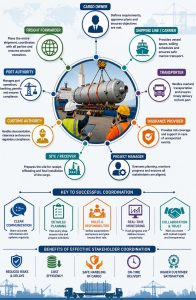
How DDU Express may help with Project Cargo Coordination
Managing various stakeholders throughout an international supply chain can be difficult without centralised logistical coordination. DDU Express can provide organisations with logistical solutions for complex movements of cargo, coordinating transportation and shipment requirements across multiple stages of the supply chain. When businesses ship project cargo – industrial equipment, infrastructure components, construction supplies and other specialised cargo – many parties must coordinate. Working with an experienced logistics provider can help firms increase communication, manage transportation activities and have better visibility throughout the package journey.Last Words
Shipping complex project cargo involves a concerted effort. Manufacturers, transport providers, ports, customs officials, engineers, final site teams all have a strong role to play in the success of the operation. Good coordination of project cargo stakeholders means that all parties understand their duties, timetables and dependencies. Clear communication, consolidated information, milestone monitoring, risk management and proactive planning can assist firms in achieving a better coordinated approach to complex freight transportation. Having various stakeholders on the same page and aligned on timing and objectives can help make even difficult project cargo moves easier to handle. Are you planning an international multileg cargo movement? Team with DDU Express on project cargo logistics solutions to assist firms handle specialised shipments inside international supply chains.
Weiworld is an experienced logistics and shipping professional with more than 20 years of industry experience, with extensive knowledge of international shipping, freight forwarding, cargo movement, and logistics operations.
Over the course of his career, he has developed deep practical expertise in Middle East logistics and operations, including shipping processes, international cargo transportation, customs-related procedures, and supply chain coordination.
At DDU Express, Weiworld shares practical insights and industry knowledge to help businesses better understand international shipping, freight forwarding, DDP services, cargo transportation, and logistics solutions across the Middle East and global markets.
His extensive industry experience provides valuable perspective for businesses looking to simplify international shipping and make informed decisions when moving cargo between countries.