

Introduction
Transporting complex cargo across borders is not merely transporting products from one place to another. A project cargo shipment might be made up of a multitude of different transit steps, documentation, handling, ports, customs procedures and coordination to the final location. With so many procedures interlinked it requires strict oversight to keep the shipment on schedule.” This is where project cargo milestone management comes into play. Breaking down a complex logistics operation into distinct milestones enables businesses to measure progress, identify potential delays in advance and synchronise activities across several stakeholders. From cargo readiness and pickup to port operations, international transit, customs clearance and ultimate delivery, each step has a role in the overall success of the shipment. This post explores the workings of project cargo milestone management and how it can help keep complex shipments on track.
What is Milestone Management in Project Cargo?
Project cargo milestone management is the identification, monitoring and co-ordination of significant events in the life cycle of a complex cargo shipment. A milestone is a significant step in the shipping process. Examples are:- For collecting items
- Okay.
- Pickup is done.
- Route cleared
- Transportation permits received
- Arrival in port
- Cargo ship sailing
- Cargo loading
- Arrival to destination
- Custom clearance
- Last delivery
- Offloading sites
Why is milestone management so critical for project cargo?
Complex project cargo logistics is usually a sequence of inter-related jobs. Each step is able to carry everything behind it. For example: Cargo Readiness Delay↓Pickup Delay↓Port Arrival Delay↓Vessel Departure Delay↓Delivery Schedule Changes A small delay can go unreported until it becomes a huge problem if there is no effective milestone tracking. Project cargo milestone management enables teams to monitor critical events and react when progress begins to diverge from the specified timeline.1. Develop a Master Project Cargo Timeline
The first step for good project cargo planning is a master time line. The schedule should include the shipment from the initial planning to the final delivery. This can include:- Cargo production finished
- Cargo Readiness Inspection and Truck pickup
- Land transportation arriving in harbour
- Loading…
- Vessel’s departure
- International Transit
- Arrived destination custom clearance
- Ground transportation
- Project Site Delivery
- Final discharge
2. Recognise the key milestones
Not everything is of similar importance. Some milestones affect the entire project timetable directly. This may be in form of:- Ready cargo date
- Cutting vessels
- Date of loading at port of
- Leaving vessel
- Customs clearance.
- Delivery period ended
- Site readiness
3. Set realistic milestone dates
Milestones should be realistic in timing. When organising project cargo logistics firms need to take into consideration the time each task will take. For example, the schedule may have to take into account:- Preparation of Cargo Documentation
- Transport bookings
- Permits approvals
- Ports operations
- Customs procedures
- Weather Report
- The final delivery arrangements.
4. Realise the Interconnection of Milestones
The transportation of project cargo includes several connected activities. One milestone may have to be completed before the next may begin. I have for example: Cargo Ready ↓ Pickup ↓ Arrival in Port ↓ Loading on Vessel ↓ Vessel Departure ↓ Arrival at Destination ↓ Customs Clearance ↓ Final Delivery If the goods are not ready, there will be no pickup. Any delay in pickup may cause the cargo to miss its intended voyage. Understanding these linkages can help logistics teams determine which milestones to focus on closely.5. Assign Responsibility for Each Milestone
Each milestone should have a clear owner. For example:- Milestone
- Who Responsible
- Carrier Pickup
- Manufacturer Ready Cargo
- Carrier Port Arrival
- Logistics Terminal
- Vessel Loading
- Carrier / Custom processing
- Customs Team
- Final Delivery
- Logistics Provider
- Site Preparation
- Project Site Team
6. Review Milestones Progress Regularly
That schedule is only the beginning. Each milestone shall be tracked for the complete length of shipment. Updates may include:- Not Started
- Work in process
- Done
- Late
- In trouble
7. Activities on the Critical Path
Some activities directly affect the final delivery date. The critical path activities for the project are as follows. For instance, if a cargo must arrive at a construction site before installation can begin, the final delivery date may be critical. Delay in:- The cargo is ready
- Transport Facilities
- Port operations
- Customs
8. Milestones for Improved Communication
Milestones provide a common language for communication between stakeholders. Instead of general updates like: “Your shipment is on its way.” A logistics staff can give you specs: “Cargo pick up has been done and shipment is expected to reach port tomorrow.” This form of communication helps the stakeholders to have a better understanding of the present state of the cargo. Clear milestone communication can help to strengthen cooperation between logistics teams, carriers, manufacturers and project management.9. Risk of Early Identification of Milestones
Not all delays are a huge issue. If a potential delay is detected in time, there may still be time to make adjustments to the timeline. For example, if the production of cargo would take longer than expected, the logistics teams may be able to:- Edit pickup date
- Re-Schedule Transportation
- Sail another way
- Add to timeline of project
- Alert final-site team
10. Schedule Change Control
Most ambitious logistical projects don’t work out. Possible changes could be due to:- Weather
- Port congestion
- Equipment availability
- CUSTOMS PROCEDURES
- Cargo status
- Transportation delays
- Site delays
- Destination reached
- Customs duties
- Ground transportation
- Crane Reservations
- Last Delivery
11. Partner with Transport Partners
Big project cargo shipments generally involve a lot of transportation vendors. These can include:- Trucking.
- Shipping firm
- railway firms
- Harbourmasters:
- Specialist Heavy Haulage Contractors
12. Milestones of Track Port and Vessel
Port and vessel operations are normally critical to international project cargo movement. Milestones can matter:- Port arrival of cargo
- Terminal acceptance.
- Loading completed
- Vessel departure
- Expected Time of Arrival
- Arrival of Vessels
- Cargo unloading
13. Customs Milestones Coordination
Customs clearance can impact the project schedule. Milestones related to customs might include:- Add documents
- Customs declaration form.
- Free Release
- The examination
14. Coordinate Final Delivery with Site Preparedness
One of the major milestones is the final delivery to the project site. But the place has to be ready to receive products. This can involve:- Access to the site
- Docking area
- Availability of cranes
- Preparing the ground
- Regulations of safety
- installation teams
15. Leverage Technology for Greater Visibility
Digital instruments can make milestone management easier. Depending on the logistics system, company can trace:- Shipment location
- Transport status
- Estimated Time of Arrival (ETA)
- Documentation
- Milestone Reached
- Delivery status updates
Project Cargo Milestone Timeline Sample
A typical cargo might look like this:- Cargo Planning ↓
- Cargo Prepared ↓
- Pickup Done ↓
- Port Arrival ↓
- Cargo Loaded ↓
- Vessels Departure
- Destination Arrival Port ↓
- Custom Clearance |
- Land Transport
- Delivery to the Project Site
- Discharge & Repositioning
Benefits of Effective Project Cargo Milestone Management
A well-run milestone system can be a boon for companies:Greater visibility
The stakeholders might know where the package is and what is the next step.Early risk detection
Potential delays can be spotted before they affect the final schedule.Improved Coordination
Logistics partners can coordinate their activities.Better Schedule Management
Project teams can monitor progress against planned dates.Rapid Decision Making
More information for stakeholders to respond to problems as they occur.Less Disruption
Planning beforehand might assist to limit the impact of delays and unplanned developments.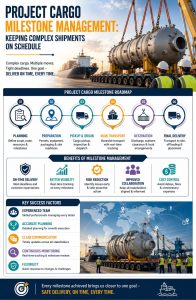
How DDU Express Can Assist with Project Cargo Logistics
To manage a complex project cargo shipment you need to have visibility in some stages of the supply chain. DDU Express offers logistical solutions for the shipping of specialised goods and enables enterprises to schedule transportation activities and the demands of shipments in worldwide supply chains. By tracking key milestones and managing various logistical tasks, businesses may increase visibility and have better control over complex shipping operations. An experienced logistics partner can help companies navigate the complexity of project cargo logistics from planning, to coordination of transportation to international movement to final delivery.Summary
Transport of complex goods is a set of interconnected tasks. With proper oversight, such as project cargo milestone management, logistics personnel can better see the progress of the shipment and can identify probable problems sooner. Milestones such as cargo readiness, port operations, customs clearance and final delivery, are all critical to keeping the overall shipment on time. But successful milestone management is more than just keeping track of dates. “It’s about understanding dependencies, aligning stakeholders, identifying risks and making timely decisions.” Companies managing complex international cargo transfers can develop a more systematic and hence predictable logistics function through the use of a systematic approach to project cargo planning. Planning a challenging cargo shipping project? Choose DDU Express for your project cargo logistical requirements. We are specialists in tricky international supply chains and niche exports.
Weiworld is an experienced logistics and shipping professional with more than 20 years of industry experience, with extensive knowledge of international shipping, freight forwarding, cargo movement, and logistics operations.
Over the course of his career, he has developed deep practical expertise in Middle East logistics and operations, including shipping processes, international cargo transportation, customs-related procedures, and supply chain coordination.
At DDU Express, Weiworld shares practical insights and industry knowledge to help businesses better understand international shipping, freight forwarding, DDP services, cargo transportation, and logistics solutions across the Middle East and global markets.
His extensive industry experience provides valuable perspective for businesses looking to simplify international shipping and make informed decisions when moving cargo between countries.